Rooting for the Little Guy: Why Independent Films Have a Grip on Our Hearts That Blockbusters Just Can't Match
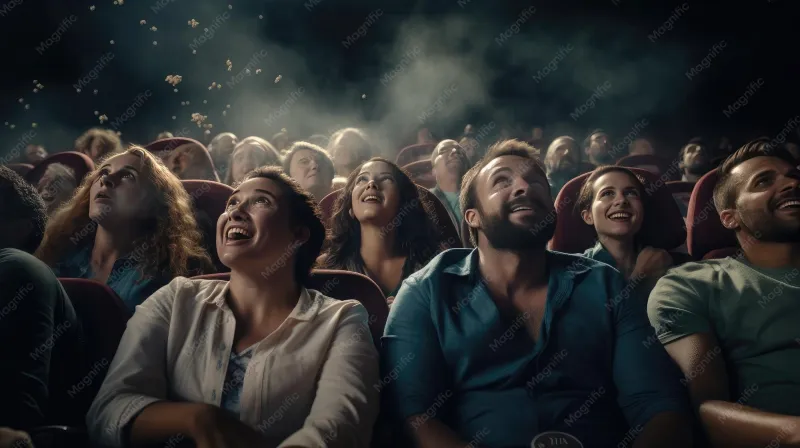
Photo: indie film audience theater emotional small cinema crowd, via img.freepik.com
We've all been there. You're watching the credits roll on some scrappy little film you'd barely heard of a month ago — maybe it came up on a streaming algorithm, maybe a friend texted you about it out of nowhere — and you feel something. Not just moved by the story, but genuinely proud of it. Like it won something. Like you won something.
That feeling has a name, and it lives at the intersection of psychology, culture, and cinema. It's the underdog effect. And right now, it's one of the most powerful forces in American moviegoing.
Why We're Wired to Root for the Underdog
Before we get into films specifically, it's worth understanding why humans root for underdogs at all. Research in social psychology has consistently shown that people in the US — arguably more than in most other cultures — have a deep-seated affinity for the underdog narrative. It connects to foundational ideas about hard work, against-the-odds triumph, and the belief that effort and heart should be rewarded over resources and power.
We see it in sports. We see it in politics. We see it in business. And we absolutely see it in cinema.
When a film is made with limited resources by people who poured everything they had into it, audiences intuitively recognize the sacrifice involved. There's no safety net. No second chances bankrolled by a parent company. Just a story and the stubborn belief that it deserves to be told. That kind of vulnerability is magnetic.
The Blockbuster Fatigue Factor
Let's be honest about something: big-budget franchise filmmaking has been running on fumes creatively for a while now. That's not a hot take — it's a sentiment that's been growing louder across film criticism, audience surveys, and box office data alike. When every summer brings another sequel, prequel, or cinematic universe expansion, the spectacle starts to feel obligatory rather than exciting.
Contrast that with an independent film that arrives with no franchise obligations, no IP safety net, and no corporate mandate to set up the next installment. It's just a story. Complete. Whole. Made because someone needed to make it.
Audiences feel that difference. They may not always articulate it that way, but the emotional response to watching something that exists purely on its own terms is fundamentally different from watching something that's been engineered to move merchandise.
The indie film isn't trying to sell you anything beyond the experience of watching it. In a culture saturated with marketing, that purity is genuinely radical.
The Streaming Shift and What It Actually Changed
Streaming platforms complicated the underdog story in interesting ways. On one hand, they democratized access — a small film from a first-time director could theoretically land in front of millions of households overnight. On the other hand, the algorithm doesn't particularly care about artistic ambition. It cares about watch time, completion rates, and whether your thumbnail is compelling enough to survive a split-second scroll.
What's emerged from that tension is a more nuanced landscape. Streaming gave indie films a distribution pathway that didn't exist a generation ago, which is genuinely transformative. But it also created new challenges around discoverability and the kind of cultural conversation that used to happen around theatrical releases.
Here's the thing though — when an indie film does break through on a streaming platform, the underdog effect amplifies. Because now the story isn't just about a small film beating the odds to get made. It's about a small film beating the algorithm, cutting through the noise, and finding its audience anyway. That's a victory worth celebrating twice.
What It Means to Be a 'Champion' Film in 2024
The definition of a successful film has genuinely shifted. For decades, box office gross was the primary scorecard. A film that didn't open big was a film that failed, full stop. That metric still matters, but it's no longer the only one that counts.
A film can now be considered a champion because it sparked a cultural conversation. Because it launched a filmmaker's career. Because it found a devoted audience that returns to it again and again. Because it said something true that a bigger, more cautious production never would have risked saying.
Independent cinema has always operated by different rules, but now those rules are being taken seriously in ways they weren't before. Critics, audiences, and even industry insiders are more willing to evaluate films on their own terms rather than against the blockbuster template.
That's a meaningful shift. It suggests that what audiences actually want from cinema is expanding — that there's genuine appetite for films that challenge, surprise, and occasionally confound, not just films that deliver exactly what the trailer promised.
The Paper Champions Mentality
There's a reason this site is called what it's called. A paper champion is someone the establishment doesn't take seriously — someone who's supposed to lose. And yet.
The films we remember, the ones that actually change how we see the world or ourselves, are rarely the ones that had the most money behind them. They're the ones made by people who had something urgent to say and found a way to say it against every reasonable obstacle.
That's the fight of a lifetime. And audiences recognize it when they see it — not because they've been marketed to, but because something in the story resonates with their own experience of being underestimated, overlooked, or told that what they're reaching for is out of their league.
Where Do We Go From Here?
The future of cinema isn't a battle between indie and studio filmmaking. It's a conversation between them — one that's getting richer and more interesting by the year. Big studios are learning from the authenticity and risk-taking of independent films. Independent filmmakers are gaining access to tools and platforms that close the gap on production quality and distribution reach.
What doesn't change is the fundamental human need to see real stories told with real stakes by people who genuinely care. That need is what built cinema in the first place, and it's what will carry it forward.
So the next time you find yourself genuinely moved by a film you'd barely heard of — the one made for a fraction of the cost of the blockbuster playing two screens over — pay attention to that feeling. It's not just entertainment. It's recognition. You're watching someone who refused to quit, and somewhere in that story, you're seeing a little of yourself.
That's the underdog effect. And in cinema, as in life, it never gets old.