Crowd Pleaser vs. Critics' Darling: The Great Indie Film Divide Nobody Talks About Enough
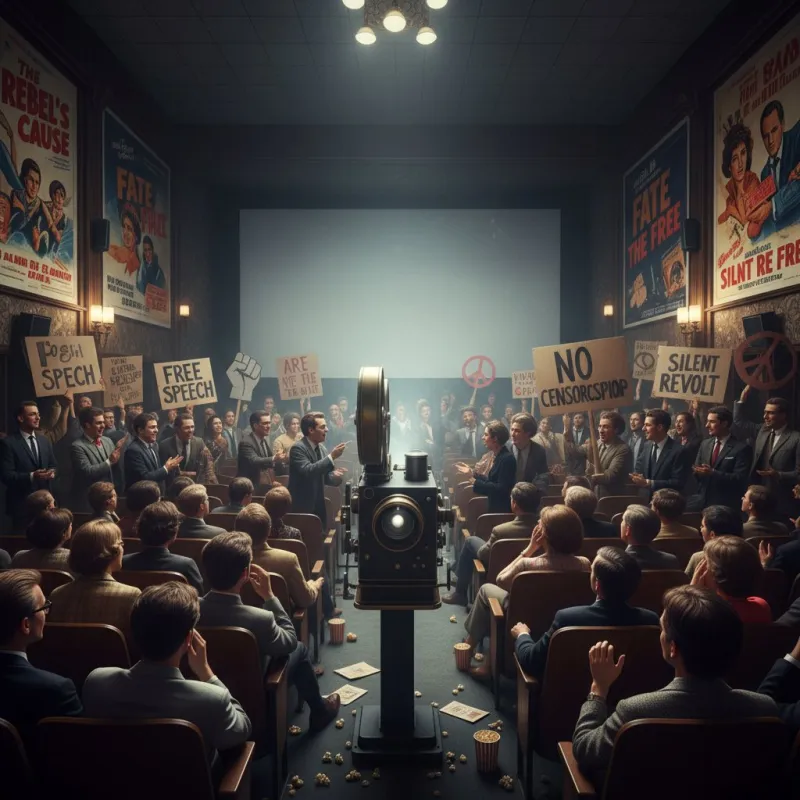
Photo: film critics versus audience debate movie theater crowd, via obrazki.ai
There's a quiet war happening in independent cinema, and it's been going on longer than most people realize. On one side, you've got critics handing out gold stars to films that empty theaters. On the other, audiences are lining up for movies that reviewers barely acknowledged. So who's actually right — and what does it mean for the filmmakers caught in the middle?
This isn't just an abstract philosophical debate. For indie filmmakers especially, the gap between critical reception and audience love can be the difference between getting your next project funded or spending another three years pitching in coffee shops.
When the Trophy Doesn't Pay the Rent
Let's talk about what happens after the festival circuit does its thing. A film earns a Grand Jury Prize, gets a standing ovation at Sundance, lands glowing 90-plus scores on Rotten Tomatoes, and then... tumbles into a limited release where it grosses less than a midsize restaurant earns in a weekend.
This isn't rare. It's almost a pattern.
Take A Ghost Story from 2017. David Lowery's slow-burn meditation on grief and time earned serious critical praise and a devoted arthouse following, but it was never going to light up multiplexes across the country. Or look at First Reformed, Paul Schrader's quietly devastating film that ended up on nearly every critic's year-end list but struggled to find general audiences who weren't already tuned into its particular frequency.
And then there's the flip side — films that critics dismissed or simply ignored, only to become genuine cultural touchstones. The Blind Side got middling reviews and won Sandra Bullock an Oscar. Crazy, Stupid, Love was treated as disposable rom-com fare but has been rewatched more times on streaming than most Palme d'Or winners.
So what's the disconnect?
Two Completely Different Questions Being Asked
Here's the thing critics and general audiences often don't acknowledge: they're not evaluating the same experience.
A critic walks into a film asking, Does this push the medium forward? Does it say something new? Is the craft here worthy of serious attention? That's a legitimate and valuable set of questions. But a regular moviegoer — the person who saved up a Friday night and paid for babysitting — is asking something closer to Did this make me feel something real? Did I enjoy spending two hours here?
Those are both valid. They're just different.
Independent cinema tends to attract films that score high on the first set of questions and sometimes — not always, but sometimes — underperform on the second. That's not a failure of the film. It's a mismatch of expectations, and it's often a marketing problem more than an artistic one.
The Snub That Wasn't Really a Snub
Every awards season, we get the same headlines: Why was [beloved film] snubbed by the Oscars? But the more interesting question is why audiences sometimes embrace the snubbed film even harder after the slight.
When The Dark Knight didn't receive a Best Picture nomination in 2008, the public outcry was so loud that the Academy literally changed its nomination rules the following year. That film had a 94% critic score, but the audience score was even higher — and the passion behind it was undeniable.
For indie films, the dynamic is even more charged. When a small, emotionally resonant movie gets overlooked by the awards establishment, it often develops a fiercely loyal underground following. The snub becomes part of the mythology. In a weird way, being ignored by the gatekeepers can sometimes be the best thing that happens to a film's long-term cultural life.
What This Means If You're the One Making the Movie
If you're an indie filmmaker, you've probably felt this tension in your own gut. You want to make something that matters artistically. You also need people to actually watch it — and ideally, for that to help you make the next one.
The filmmakers who seem to navigate this best are the ones who get honest with themselves early about which audience they're actually making the film for. Not in a cynical, market-research way. More in a who is this story for, and how do I find those people kind of way.
A few things worth considering:
Critical buzz is a marketing asset, not a destination. A great review from a major outlet opens doors — it gets distributors on the phone, it earns you a slot at festivals you might not have landed otherwise. But it's a tool, not a finish line. Use it to amplify what you're already building.
Audience metrics tell you things critics can't. If your film is connecting emotionally with regular viewers — if people are crying at your Q&As, if they're posting about it unprompted — that's data. That's the kind of word-of-mouth that fills seats over time, even when the initial press attention fades.
The middle ground is harder to find than it looks, but it exists. Films like Moonlight and Everything Everywhere All at Once managed to earn serious critical respect while also generating genuine audience enthusiasm. What they share isn't a formula — it's a specific kind of emotional honesty that lands across different types of viewers. That's worth studying.
Playing the Long Game
Here at Paper Champions, we're drawn to the stories of filmmakers who keep fighting even when the scorecards don't line up the way they expected. The truth is, the critics-versus-audiences divide isn't something you solve. It's something you learn to work with.
Some of the greatest films ever made were ignored in their time. Some of the most beloved crowd-pleasers have been condescended to by the critical establishment for decades. The audience that matters most is ultimately the one that carries your film forward — whether that's a small, passionate group of devoted viewers or a mainstream wave that surprises everyone, including you.
Make the film you have to make. Then get strategic about who you're talking to and how. The gap between critical acclaim and audience love isn't a wall — it's a conversation. And the filmmakers who understand that tend to stay in the ring a lot longer.