Why We Root Harder for the Filmmaker Who Almost Quit: The Real Reason Behind-the-Scenes Struggle Hits Differently
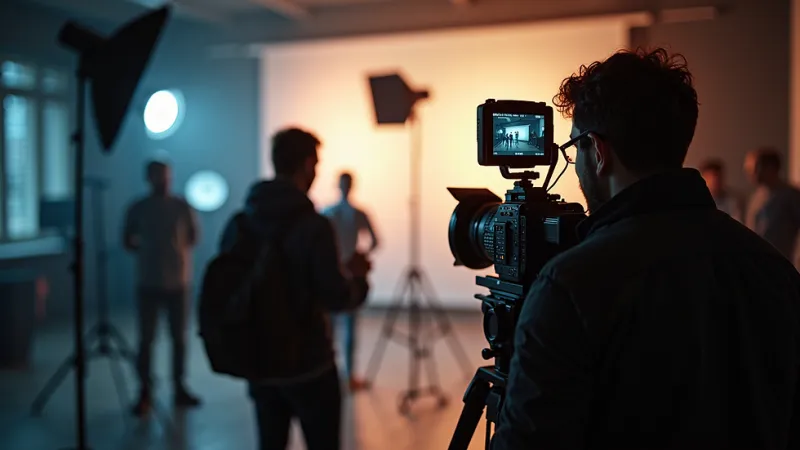
Photo: indie filmmaker behind the scenes camera crew small production, via static.wixstatic.com
The Story Behind the Story Is the One We Can't Stop Watching
Here's a question worth sitting with: why do so many people who discover an indie film through a crowdfunding campaign, a behind-the-scenes TikTok series, or a director's brutally honest Substack end up becoming its most passionate advocates?
It's not just because they feel involved. It's something deeper than that — something that taps into one of the oldest storytelling instincts we have as human beings. We are hardwired to root for the underdog. And when a filmmaker lets us see the fight in real time, we don't just watch the movie. We become invested in the person who made it.
This is the underdog effect, and for indie filmmakers, understanding it isn't just a nice insight — it's a genuine competitive advantage over studios with a hundred times the budget.
The Psychology of Struggle: Why Obstacles Make Us Care More
Social psychologists have long documented something called "effort heuristic" — the cognitive tendency to assign greater value to things that visibly required more work to create. When we know something was hard to make, we perceive it as more meaningful, more worthy of our attention.
Now layer that onto the filmmaking context. When a director shares that they maxed out two credit cards to finish post-production, or that they reshot the entire third act with a borrowed camera after the original footage was corrupted, we don't just feel sympathy. We feel invested. Their problem becomes our problem. Their victory — the finished film, the festival acceptance, the distribution deal — becomes our victory too.
This is fundamentally different from how we experience a Marvel release. We know those films exist within a system designed to succeed. The machine is too big to feel fragile. There's no jeopardy, and without jeopardy, there's no emotional stakes.
Indie films live in jeopardy constantly. And that vulnerability, when shared openly, is magnetic.
Crowdfunding Changed the Relationship Between Filmmaker and Audience
Before Kickstarter and Indiegogo reshaped the indie funding landscape, the relationship between filmmaker and viewer was largely one-directional. You made the film, they watched it. The transaction was clean and distant.
Crowdfunding broke that model in a genuinely interesting way. When someone backs a film for $25 during a campaign, they're not just donating — they're entering a relationship. They've taken a small financial stake in something that doesn't exist yet, which means they now have a personal interest in its success.
Filmmakers who understand this treat their backers accordingly. Regular production updates, honest check-ins when things go sideways, personal thank-you videos — these aren't just good campaign management. They're the building blocks of a loyal audience that will show up for opening weekend, share the trailer without being asked, and defend the film passionately in comment sections.
The campaigns that generate the most passionate communities are almost always the ones where the filmmaker let people see the mess. Not just the polished milestones, but the genuine setbacks. The reshoot that almost didn't happen. The lead actor who got sick. The permit that fell through the day before a critical shoot.
Authenticity, it turns out, is the best marketing strategy an indie filmmaker has.
Social Media and the Rise of the Filmmaker as Character
Something shifted in the last several years on platforms like Instagram, TikTok, and YouTube. Audiences stopped just following films — they started following filmmakers. The behind-the-scenes content that was once reserved for DVD bonus features became its own ongoing narrative, often more compelling than the film itself.
Directors like Kogonada, RaMell Ross, and a generation of emerging voices have built genuine communities around their creative process. Not by performing success, but by sharing the actual texture of making something difficult. The 3 a.m. edit sessions. The disagreements on set. The moment of clarity that saved a scene that wasn't working.
This kind of transparency creates something studios genuinely can't replicate: parasocial investment. Followers begin to feel like they know the filmmaker. And when you feel like you know someone, you show up for them in ways that go beyond passive consumption. You become an advocate. You tell people about the film. You bring friends to the screening.
For an indie film with a limited marketing budget, that word-of-mouth network built through authentic storytelling is worth more than any paid ad campaign.
What Viewers Actually Say About Why They Care
Talk to people who became devoted fans of an indie film and a pattern emerges quickly. It's rarely "the cinematography was incredible" or "the script was flawless." More often it sounds like:
"I followed the director for two years while they were making it. I felt like I was part of it."
"They almost ran out of money three times. When I finally watched it, I was crying before it even started."
"There's something about knowing a real person bet everything on this that makes you pay attention differently."
That last one is key. The context in which we receive a piece of art shapes how we experience it. A film we know was made against impossible odds lands differently than one we know had every resource available. The struggle becomes part of the meaning.
How Filmmakers Can Share Their Journey Without Oversharing
There's a real skill to sharing your creative process in a way that builds connection without feeling like a continuous cry for help. A few principles that seem to work:
Be specific, not vague. "It's been a tough week" doesn't connect people. "We lost our location two days before the shoot and had to redesign the entire scene in a parking garage" gives people something real to hold onto.
Show the recovery, not just the setback. The most compelling behind-the-scenes narratives have a structure: problem, struggle, solution. Audiences want to see you fight back. They're not here for a defeat — they're here for the comeback.
Let other people into the story. Your crew, your cast, your collaborators — they all have stakes in this too. Sharing their contributions and their own moments of doubt and triumph expands the emotional footprint of your story.
Don't perform struggle you're not actually experiencing. Audiences are remarkably good at detecting inauthenticity. The goal is transparency, not theater.
The Underdog Story Is the Oldest Story We Tell
At its core, this is what Paper Champions is really about — the fight to make something real in a world that makes it very difficult to do so. That fight resonates because it mirrors something most of us recognize in our own lives. We've all had projects that almost didn't happen, dreams that required more than we had, moments where quitting felt like the rational choice.
When an indie filmmaker shares that story honestly, they're not just marketing a movie. They're inviting an audience into a shared human experience. And that's the kind of connection that no studio budget can manufacture.