Eight Counts and a Prayer: The Quiet Math Behind Every Brutal On-Screen Brawl
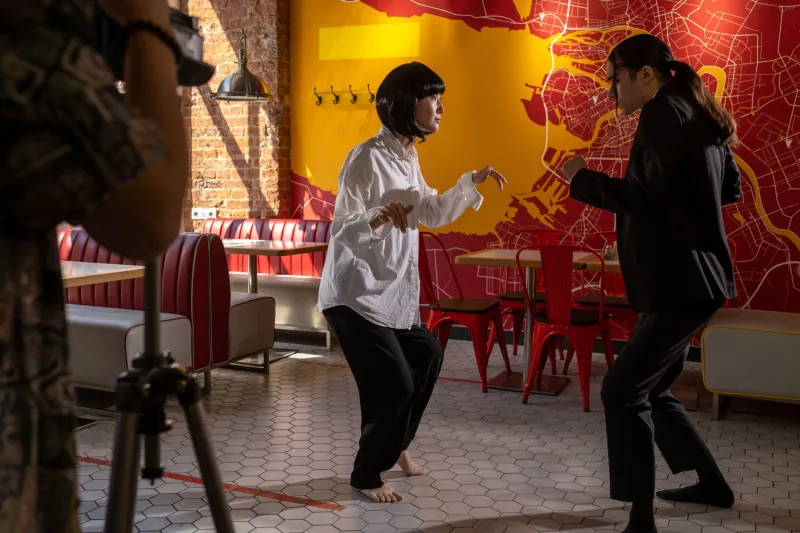
Here's a fun party trick for your next movie night: pick any fight scene that made you wince, rewind it, and count the beats. Not the punches — the beats. You'll start noticing something almost mathematical underneath all that supposed mayhem. One, two, hook, miss, three, four, stagger. It's choreography, and on a well-run indie set, it's choreography down to the breath.
The dirty secret of fight films — indie or otherwise — is that the fights that look the most dangerous are usually the ones where nobody touched anybody. And according to the folks who stage these scenes for a living, that's not a limitation. It's the whole point.
The Illusion Is the Product
"If an actor gets hit for real, I've failed," one veteran fight coordinator told us, only half-joking. "My job is to make a million-dollar lie out of eight counts and camera angles."
That philosophy runs deep in the indie world, where there's no studio insurance policy deep enough to absorb a broken jaw from your lead actor — the same lead actor you spent two years and a second mortgage casting. Micro-budget fight films can't afford stunt doubles for every setup, so they build safety into the choreography itself. Every exchange is broken down into counts, the way a boxer drills combinations in the mirror. Except here, the jab stops six inches from the face, every single time, no matter how many takes the director wants.
The result, when it's done right, reads as chaos. The audience sees desperation. What actually happened on set was a dance number with worse intentions.
Rehearsal Is Where the Fight Gets Won
Ask any choreographer and they'll tell you the fight is basically over before the cameras roll. Weeks of rehearsal in a studio or a garage — slow motion first, then half speed, then full speed once the muscle memory locks in. By the time an actor steps on set, the sequence lives in their hands the way a drum fill lives in a drummer's arms.
This is where indie productions actually have an edge over the big studio machine. A tight crew, a small cast, and a flexible schedule mean you can rehearse until it's boring. Boring is good. Boring means safe. Boring means that on shooting day, your two leads can sell a twelve-punch exchange in three takes without anybody visiting an urgent care clinic in the middle of a shoot day.
The rhythm matters more than the moves. Choreographers talk about an "eight-count" the way dance instructors do — a fixed number of beats that both performers share. If both actors are counting the same eight, they can miss each other by inches with total confidence. If one of them loses the count, that's when people get hurt. Which is why good fight scenes are really conversations, and great ones are conversations two people have rehearsed so thoroughly they can whisper them at full speed.
Selling the Hit Without Landing It
So how does a punch that never connects leave a mark on the audience? A few tricks of the trade:
- The reaction sells the punch. Viewers don't watch the fist; they watch the face it doesn't hit. A well-timed head snap, a spray of water or spit, a stumble that's actually a choreographed fall — that's what reads as contact.
- The camera is a co-conspirator. Shoot the impact angle from behind the receiver, cut on the beat, and the audience's brain fills in the collision. Editing does half the fighting on any film you've ever loved.
- Sound finishes the job. A thud layered in post can turn a graceful near-miss into a knockout. The eye is easily lied to when the ear is on its side.
Stack those three elements on top of a rehearsed count, and something strange happens: the audience stops watching a performance and starts watching a fight.
Why Real Danger Is Actually Bad Filmmaking
There's a macho strain of film culture — you've seen the interviews — where actors brag about taking real punches for authenticity. And look, commitment is admirable. But choreographers will tell you something counterintuitive: real contact often makes fights worse on screen. Actors who are genuinely getting hit start protecting themselves. They pull punches, flinch early, shorten their movements. Fear reads as fear, not ferocity.
An actor who feels completely safe, meanwhile, can commit one hundred percent to the performance of violence. Full speed, full intention, zero hesitation. That's what audiences interpret as brutality — not actual broken ribs, but the total absence of pull-back in the performance.
The illusion of danger, it turns out, is more valuable than the danger itself. For indie filmmakers working with unknown actors, first-time stunt performers, and equipment held together with gaffer tape, that's not just a safety guideline. It's a survival strategy. The fight of a lifetime should happen on screen. The set should feel like rehearsal — because it is.
So the next time a low-budget brawl on screen makes you flinch, tip your cap to the count. Somewhere out there, two actors counted to eight together a few hundred times so you'd believe they wanted to kill each other. That's not a shortcut. That's craft.