Selling a Punch That Hasn't Been Thrown Yet: Inside the Wild World of the Pre-Production Fight Film Trailer
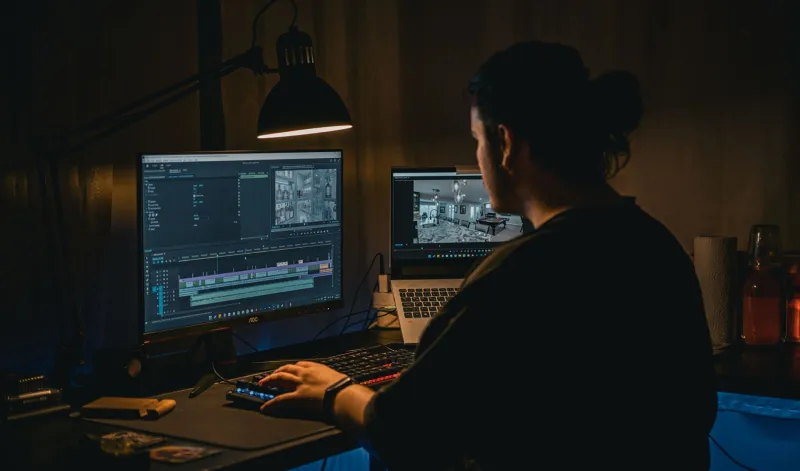
There's a strange alchemy that happens in the indie fight film world, and it doesn't take place in the ring or on set. It happens in a dark edit bay, months before a single frame of the actual movie gets shot, when a trailer editor stares at a hard drive full of nothing and somehow builds a knockout.
If you've ever watched a gritty boxing drama teaser and thought, "Wow, this looks finished," there's a decent chance you were looking at test footage, a proof-of-concept short, and a whole lot of smoke and mirrors. Welcome to the fine art of selling a fight film that hasn't been fought yet.
Ninety Seconds to Convince a Stranger With Money
Here's the math that keeps indie producers up at night: you need financing, financiers need proof, and nobody hands over six figures based on a logline and a handshake. So the proof becomes a trailer — a sizzle, a pitch cut, whatever your region calls it. Ninety seconds of footage that has to scream "this movie already exists in my head, and it's incredible."
The catch? Half the time, that footage is stitched together from casting sessions, a weekend shoot in a rented gym, and B-roll borrowed from the DP's last gig. The trick isn't hiding that. The trick is making the audience feel the movie's pulse through the seams.
How You Fake a Knockout Without a Story
We talked to a few trailer editors who work the indie circuit — the kind of folks who cut festival sizzles in one week and studio teasers the next — and they all landed on the same principle: a fight film trailer isn't about the fight. It's about the stakes.
"Nobody cares about a punch," one editor told us over a very long phone call. "They care about who's throwing it and what it costs them. If I've got two actors in a garage with borrowed gloves, I can shoot thirty seconds of footage that makes you believe there's a whole third act hanging on that punch. You just frame it right, cut it on the breath, and let the silence do the work."
That's the recurring theme: silence. Amateur fight trailers drown everything in training-montage music and trailerized bass drops. The ones that actually move money? They breathe. A exhale. A glove hitting canvas. One line of dialogue that hints at a debt, a kid, a last chance. Then the sound of the crowd — often recorded on a phone at a real amateur bout in Ohio or Texas — swelling under a title card that doesn't exist yet.
Slow Motion Is a Lie Detector
Fight footage shot for pitch purposes lives and dies in slow motion. It's not just an aesthetic choice — it's a practical one. Slow motion hides everything. The stunt coordinator's knee brace, the stunt double's different jawline, the fact that the "opponent" is the director's brother-in-law. At 48 frames played back at 24, sweat looks like commitment and a sloppy right cross looks like tragedy.
But there's a psychology to it too. Trailer editors know that slowed-down impact gives the viewer time to project a story onto the hit. Your brain fills in the before and after. Who is this person? What are they fighting for? That's the sale happening in real time, inside the viewer's head, and the editor didn't have to shoot a single scene of it.
Fake blood helps. Obviously. But the good editors swear you need less than you think — one streak of red on a cheekbone reads as "movie," while a face full of corn syrup reads as "student film."
When the Trailer Writes a Check the Movie Has to Cash
Here's where it gets dicey, and where the ethics start to flicker. A killer pitch trailer can get you into rooms at the American Film Market, get you a meeting with a boutique financier in LA, get a mid-budget indie greenlit. It can also set expectations the finished film can't possibly match.
Every indie producer has a story about the movie that got financed on the strength of a sizzle cut and then spent two years trying to be the movie the trailer promised. The trailer was cut with perfect pacing, a licensed track that cost more than the sound budget, and footage shot over three golden hours with a crew of twelve. The film got shot in nineteen days with a crew of nine.
The smart ones plan for this. They cut the trailer around moments they know they can actually deliver — a performance beat, a visual signature, a tone. They're not selling scenes; they're selling a promise they intend to keep.
The Trailer Is the First Round
If there's a takeaway for filmmakers dreaming up their own fight film, it's this: treat your pitch trailer like the opening bell, not the whole bout. It earns you the chance to fight. It doesn't win anything on its own.
Invest in those ninety seconds. Shoot real footage, even if it's just two actors and a borrowed ring in a VFW hall outside Cleveland. Cut it with restraint. Sell the stakes, not the spectacle. And when the money comes through and you're finally on set shooting the real thing, remember the exact feeling that trailer gave you — because that feeling is what the audience is buying a ticket for.
The punch everyone remembers was thrown in an edit bay first. Everything after is just making it true.