The Referee You Never See: Why the Editing Room Calls Every Fight Before the Bell Rings
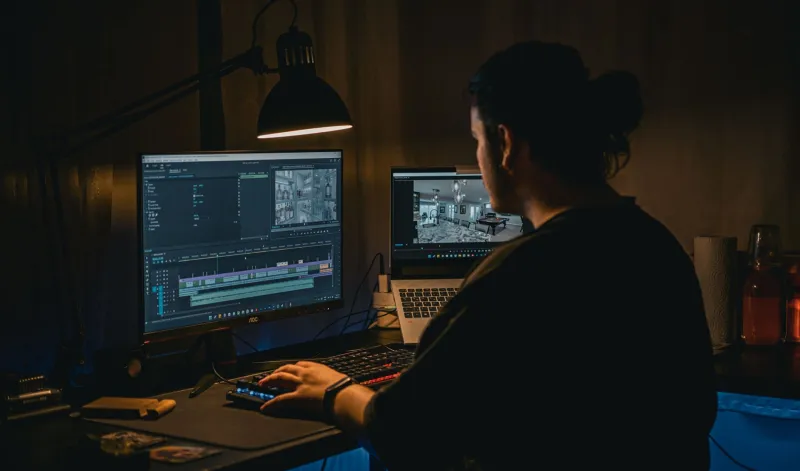
Here's a fun party trick for your next movie night: rewatch any great on-screen brawl and try to count the cuts. Not the punches — the cuts. What felt like one continuous, brutal exchange was probably assembled from forty different pieces of film, stitched together by someone who wasn't even in the room when the gloves went on.
That person is the editor. And in fight films especially, they might be the most important fighter on the roster.
The Fight Happens Twice
"We shot the finale over five days," says a director we'll call Marty, because he asked us not to use his name while his indie boxing drama is still shopping for distribution. "Five days, two exhausted actors, one bruised stunt coordinator. But the fight the audience sees? That got built over three weeks in a suite in Burbank. The second version is the one that matters."
It's a truth that fight film veterans understand intuitively: choreography gives you raw material. The edit gives you a result. The same footage — the same jabs, the same falls, the same sweat flying off a jaw — can be cut so the hero dominates, or so he barely survives, or so he loses and you somehow still feel okay about it.
The difference between those outcomes? Sometimes it's a single frame.
Held Frames and Hard Cuts
Ask editors what makes a punch land and they'll talk about things that sound almost boring. Timing. Overlap. Rhythm.
"A held frame — freezing on the impact for a beat longer than feels natural — tells the audience's brain, this one hurt," explains one veteran editor who's cut three sports features. "It's a lie, technically. Nothing about the image changed. But the pause does all the work."
The opposite trick works too. A jump cut in the middle of a swing — skipping a few frames so the motion snaps faster than reality — makes a choreographed shove feel like a haymaker. Meanwhile, dropping the sound out entirely for half a second before the impact hit? That silence is doing more emotional heavy lifting than any sound effect could.
These are split-second choices, made hundreds of times per fight sequence. And unlike a director on set, an editor has the luxury of trying it both ways. Punch thrown left to right feels dominant. Reverse it, and suddenly the hero's on his heels. Same footage. Different story.
Rigging the Bout (Legally)
Here's where it gets a little uncomfortable: the edit doesn't just shape how a fight feels. It shapes who you believe should win.
Editors talk about "load-bearing shots" — the moments that quietly tell the audience who to root for. A lingering close-up on the underdog's taped hands. A reaction cutaway to a loved one in the crowd, timed to land exactly when the hero gets knocked down. None of it is explicit. All of it is directional.
"You can make an audience accept a loss if you've earned it in the cut," Marty says. "But if the rhythm betrays them — if the pacing says 'comeback' and then you don't deliver one — they'll walk out mad and they won't know why. They'll just know the movie lied to them."
That's the strange power of the editing room. It's not just assembling a fight. It's refereeing one, invisibly, making calls the audience never questions because they never see the whistle.
Lessons for Your Own Cut
If you're an indie filmmaker cutting your first fight sequence, take these from people who've been in the chair:
Cut on motion, land on stillness. The most common rookie mistake is cutting everywhere. Let impacts breathe. Chaos reads as chaos only when it's surrounded by clarity.
Your sound edit is half the fight. Skin, leather, breath, crowd. Layer them, then subtract. The punch that lands hardest is usually the one with a hole in the soundtrack a beat before it.
Shoot for the edit you can't afford. Coverage is cheap on set and priceless in post. Get the impact, get the reaction, get the wide, get the insert of the glove. Future-you, three weeks into the edit, will send thank-you notes.
Test it on someone who doesn't care. Not your producer. Not your mom. Someone who'll tell you the truth: did you flinch? If not, the cut isn't done.
The Invisible Champion
There's a reason nobody gives out an Oscar for Best Fight — the work is diffused across a dozen crafts, and the editor's contribution is deliberately invisible. When it's done right, you don't see editing at all. You see a story about two people and a result that feels inevitable.
But inevitability, in movies, is manufactured. Frame by frame. Beat by beat. In a quiet room, long after the bruises have faded.
The next time a screen fight knocks the wind out of you, spare a thought for the person at the keyboard. They threw every punch you felt. You just never saw them swing.